
Transformer Manufacturing Process: From Design to Quality Testin
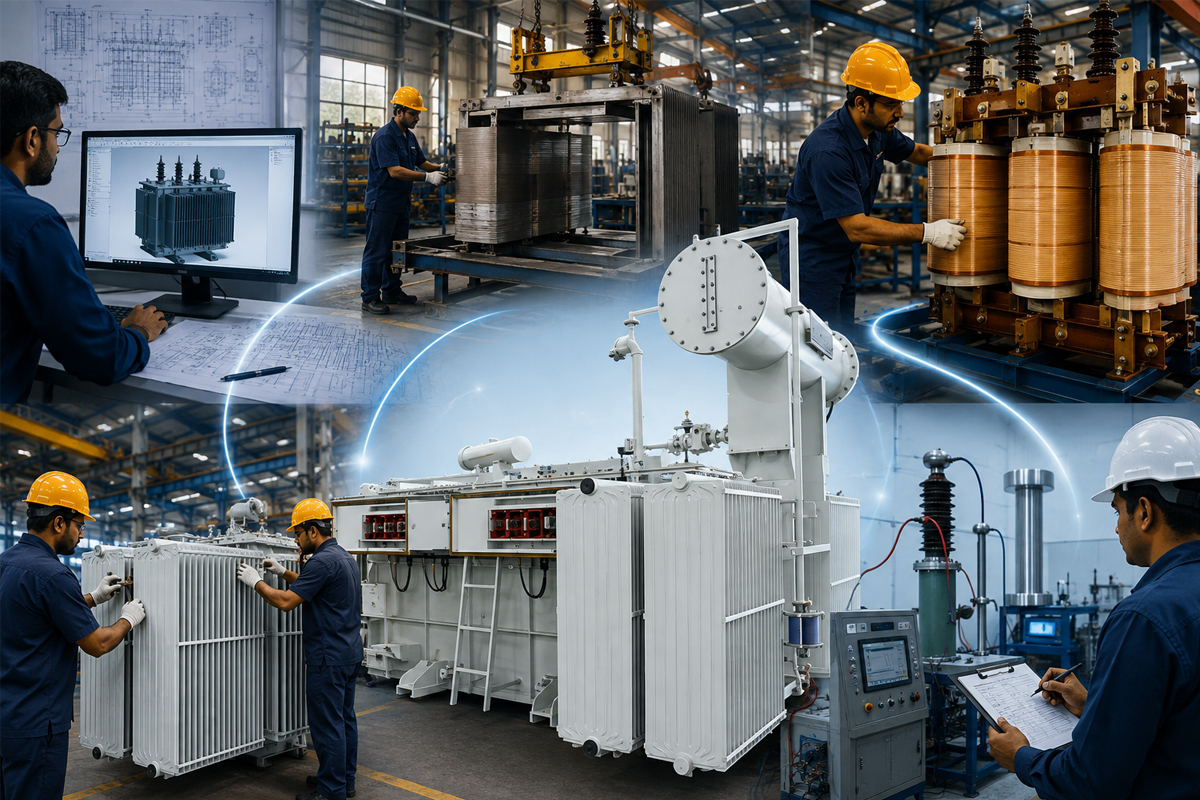
A power transformer is an electrical part that is used to move electrical energy between circuits while making the voltage higher or lower. The making of a power transformer needs planning, good materials, new technology and strict checking to make sure it works well. Learning how transformers are made helps companies pick the transformer for their power needs.
1. Transformer Design and Engineering
The making of a transformer starts with electrical and mechanical planning. Engineers look at things like voltage level, power amount, frequency, how well it works, how much insulation it has, how it cools and the conditions it will work in. The design for the transformer is made based on what it will be used for. The performance rules it must follow. Good design makes sure the power transformer can work safely and well under electrical loads.
2. Core Manufacturing
The transformer core gives a path with resistance for magnetic energy. Quality electrical steel, usually in layers to cut down on energy loss is cut and put together exactly as the design says. Building the core right helps make the transformer work and lowers energy loss and extra heat when it is running.
3. Winding Manufacturing
Transformer windings are made using copper or aluminum wires. How the windings are set up depends on the design of the transformer and the voltage needed. There is covering between each wire and each layer to stop electricity from breaking down. Being exact when making the windings is very important for getting electrical work and a long time of use.
4.. Assembly
The core and the windings are put together with the right insulation materials to keep them separated and strong. For transformers that use oil the inside part is put into a tank. Parts like bushings, coolers, tanks that hold oil switches to change the voltage and safety tools are added according to what the transformer needs.
5. Transformer. Cooling System
The tank for the transformer is built to handle the working conditions and protect what is inside. Depending on how big the transformer's what it is used for the cooling system is put in place. Coolers or other cooling tools help keep the temperature right and make sure the transformer works well when it is used all the time.
6. Quality Testing
Checking the quality is one of the important steps, in making a power transformer. Every transformer goes through tests to see how well it works how safe it is and how steady it is. Common tests include checking how resistance the wires have how much resistance the insulation has checking the number of turns checking how much energy is lost when there is no load checking how much energy is lost when there is a load testing how well it handles electricity and checking how it works when it gets hot. These tests help find problems that happened when it was made and make sure the transformer follows the rules and quality standards it needs to meet.
7. Final Inspection and Delivery
After the tests are done the transformer is looked at one time. Engineers check the size, the parts, the connections, the finish, the papers and how everything is built. Once it is approved the transformer is readied for moving and putting in place.
Conclusion
The making of a power transformer has steps, from planning and building the core to making the windings putting it all together checking it and looking it over one last time. Each step is important to make sure the electrical work is good. Picking a transformer maker that has a lot of experience and good checking methods can help companies get power moving better have steady power and work well for a long time.